Articles

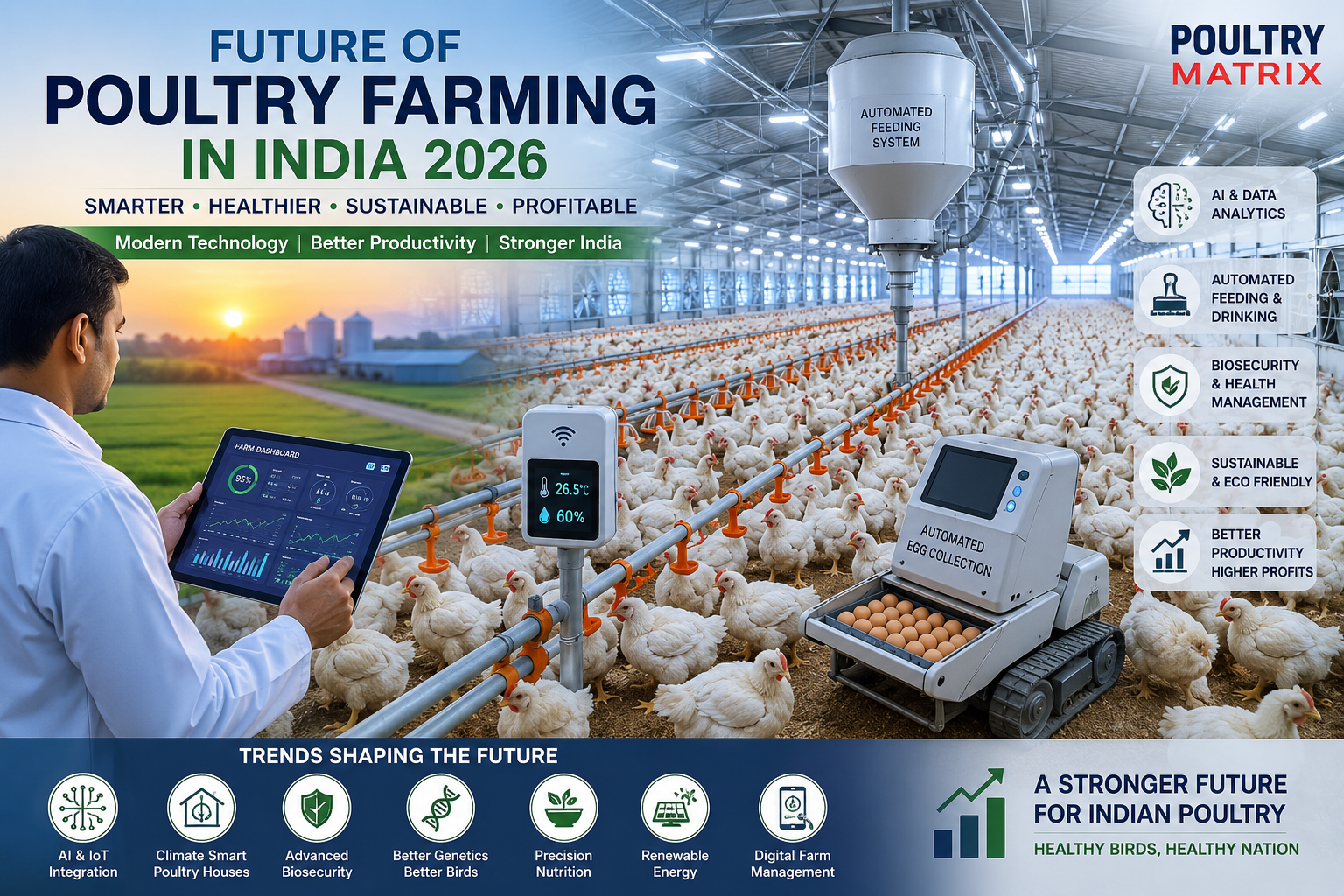
The Future of Poultry Farming in India: Trends to Watch in 2026India's poultry sector has become one of the fastest-growing segments of the agricultural economy. Rising protein consumption, technological advancements, improved genetics, and increasing investments are transforming poultry farming into a modern and profitable business. As we move through 2026, poultry farmers, integrators, veterinarians, feed manufacturers, and allied businesses are embracing innovative solutions to improve productivity, sustainability, and profitability.This article explores the key trends shaping the future of poultry farming in India and how stakeholders can prepare for the next generation of poultry production.Why the Indian Poultry Sector is GrowingThe Indian poultry sector continues to expand due to several important factors:Rising demand for chicken meat and eggsGrowing urban populationHigher disposable incomeIncreased awareness of protein-rich dietsBetter farming technologiesGovernment support for livestock developmentIndia is among the world's leading producers of eggs and broiler chicken, creating significant opportunities for farmers and agribusinesses.1. Smart Poultry Farming with Artificial Intelligence (AI)Artificial Intelligence is changing poultry farm management by enabling data-driven decisions.Modern poultry farms now use AI-powered systems that monitor:Bird activityFeed intakeWater consumptionTemperatureHumidityAir qualityMortality patternsThese systems help farmers detect health issues early, reduce production losses, and improve flock performance.BenefitsEarly disease detectionLower mortalityBetter feed efficiencyReduced labour costsReal-time farm monitoring2. Automation is Becoming the New StandardAutomation has become one of the biggest trends in commercial poultry farming.Today's farms are increasingly equipped with:Automatic feedersAutomatic drinkersClimate control systemsEgg collection systemsConveyor beltsSmart weighing equipmentAutomation reduces human error while improving production efficiency.AdvantagesConsistent feeding schedulesBetter bird welfareReduced feed wastageLower operational costsImproved productivity3. Climate-Controlled Poultry HousesClimate change is making environmental control more important than ever.Modern poultry houses use:Tunnel ventilationCooling padsExhaust fansAutomated temperature sensorsHumidity controllersMaintaining an optimal environment reduces heat stress and improves bird performance throughout the year.Key BenefitsBetter weight gainLower mortalityImproved feed conversion ratio (FCR)Higher production efficiency4. Improved Biosecurity PracticesDisease prevention is one of the most critical aspects of successful poultry farming.In 2026, commercial farms are strengthening biosecurity by implementing:Restricted visitor accessVehicle disinfectionFoot bathsProtective clothingRegular sanitationControlled movement of birdsVaccination programmesStrong biosecurity not only protects flocks but also improves long-term farm profitability.5. Sustainable Poultry FarmingEnvironmental sustainability has become a major priority.Many poultry businesses are adopting eco-friendly practices such as:Solar-powered poultry farmsRainwater harvestingEnergy-efficient ventilationPoultry litter managementOrganic fertiliser productionWater recyclingSustainable farming reduces environmental impact while lowering operational costs.6. Digital Farm ManagementModern poultry farms are increasingly managed using mobile applications and cloud-based software.Farmers can now monitor:Daily mortalityFeed consumptionMedication recordsVaccination schedulesGrowth performanceProduction reportsFinancial recordsDigital management improves decision-making and farm efficiency.7. Better Genetics and Breed ImprovementContinuous genetic improvement has significantly enhanced poultry performance.Modern commercial breeds offer:Faster growthBetter feed conversionHigher egg productionImproved disease resistanceUniform flock performanceChoosing the right breed is essential for maximising farm profitability.8. Nutrition and Feed InnovationFeed accounts for nearly 65–70% of poultry production costs.Recent innovations include:Precision nutritionEnzyme supplementationProbioticsOrganic mineralsAmino acid balancingNatural growth promotersOptimised nutrition improves feed efficiency while reducing production costs.9. Data Analytics for Better Decision MakingModern poultry farms are using analytics to monitor:Feed conversion ratio (FCR)Mortality trendsEgg productionBird weightWater intakeDisease outbreaksData-driven management enables farmers to identify problems early and make informed business decisions.10. Growing Export OpportunitiesIndia's poultry products are gaining recognition in international markets.Future opportunities include:Processed chicken productsTable eggsEgg powderValue-added poultry productsPoultry breeding stockImproved quality standards and disease control can further strengthen India's global competitiveness.Challenges AheadDespite rapid growth, the poultry sector faces several challenges:Rising feed ingredient pricesClimate changeDisease outbreaksLabour shortagesMarket price fluctuationsTransportation costsFarmers who embrace technology, biosecurity, and efficient management practices will be better equipped to address these challenges.
poultrymatrix.in
The Future of Poultry Farming in India: Trends for 2026

Explore the future of poultry farming in India in 2026. Learn about automation, AI, biosecurity, sustainability, smart farming, and market trends.

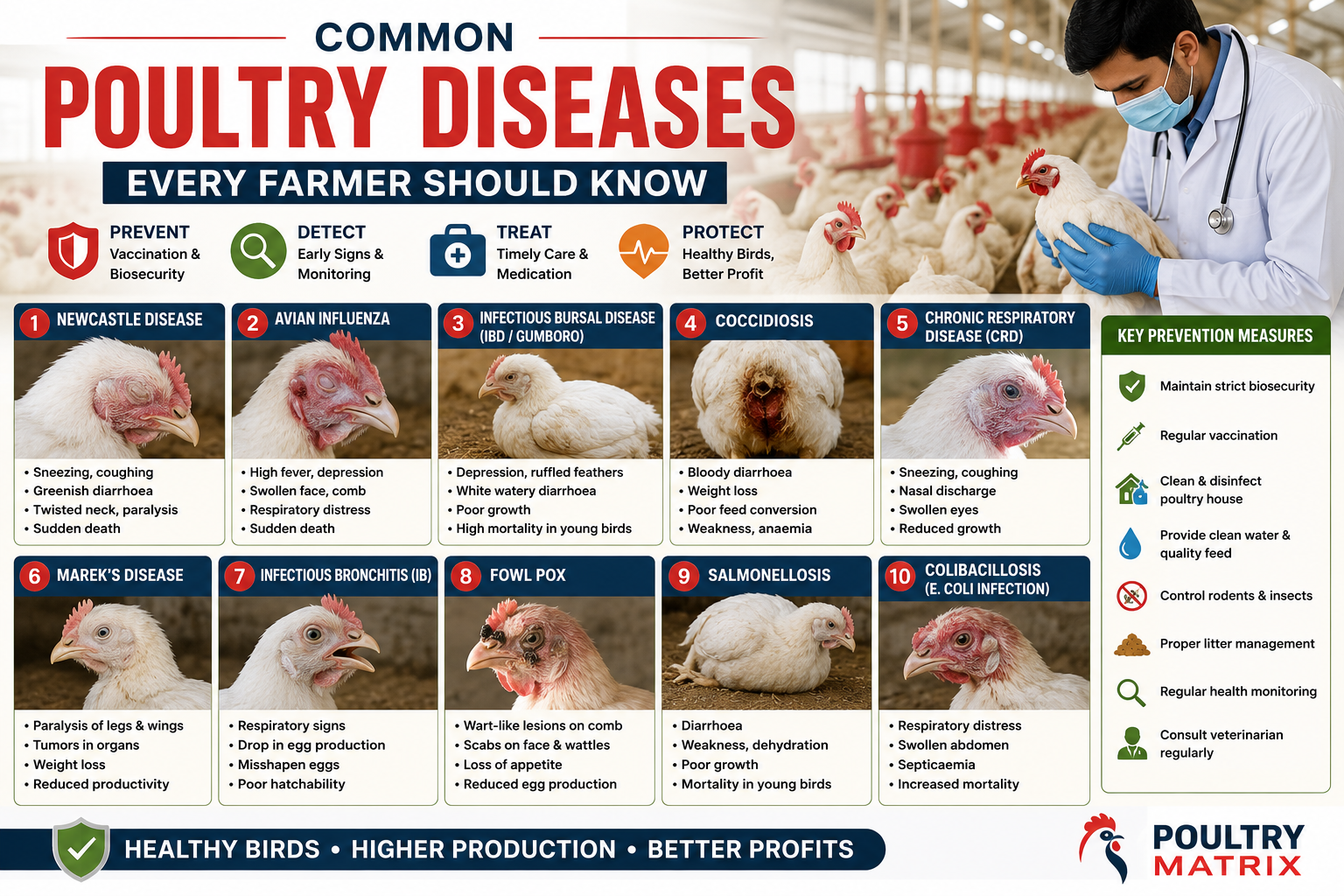
Common Poultry Diseases Every Farmer Should Know

Learn about the most common poultry diseases, their symptoms, causes, prevention, and treatment. Protect your flock with this complete guide from Poultry Matrix.

Scroll to Top